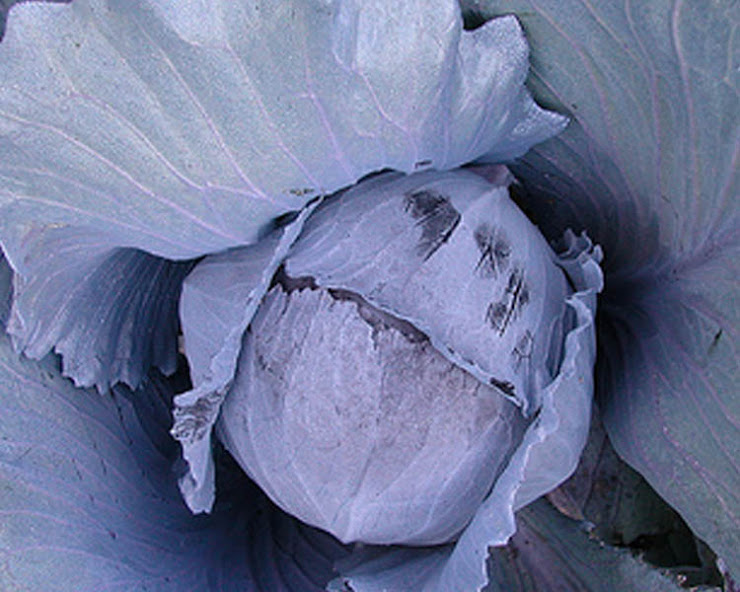
The Big Beet Experiement is nearly complete. Mr. Beet lasted all winter in the refrigerator and has been planted out in the garden. He was stored wrapped in two sheets of newspaper and stored in a plastic produce bag in the crisper. He emerged solid without evidence of rotting and even little baby sprouts shooting from the top. So, out to the garden he goes, planted so that the top is out of the soil, being careful to keep the roots straight, add a good bit of watering and wait to see what happens. The point of overwintering this beet and replanting him is to save seed.
This beet became a candidate for seed saving as a result of it's vigor in the garden, (it grew well and fast), and it's resistance to insect damage (when all the leaves on my other beets were ravaged, this one stood tall and undamaged!). Beets and other roots are biennial plants, in that they produce seeds the second year. So, Mr. Big Beet hopefully will flower and make seeds which I will collect to use in the future. The variety of this beet is called Detroit Dark Red, this beet variety is one on offer by Seed Savers Exchange in Decorah, IA. Seed Savers Exchange promotes heirloom, open pollinated varieties in an effort to maintain the genetic heritage and diversity of our food crops. They also work with heritage breeds of chickens, ducks, turkeys, cattle and apple breeds. The work they do helps to combat the monopolization of our food system by companies who seek to patent genetic material and control the food chain from "birth" to plate. Seed Savers Exchange is a non-profit and do tremendous work on behalf of anyone who eats! (http://www.seedsavers.org/)
Showing posts with label Seed Savers Exchange. Show all posts
Showing posts with label Seed Savers Exchange. Show all posts
Monday, April 19, 2010


Wednesday, January 27, 2010
Is it time yet? Maybe yes, maybe no...
For the gardener, January is pure torture and delight! The seed catalogs show up and they have all these wonderful glossy pictures, filled with promises of "heavy yields" or "top producer", they promise resistance to drought or heat or cold or disease or infestation and they comfort the agitated gardener who looks upon the garden covered in a blanket of snow and can do nothing but think of spring. I have made my decisions, which as soon as the weather warms, I will abrubtly change I am sure. I have placed my orders, mixed up the starting medium, sanitized my pots and now I wait. Depending on your climate, it may be time to start seeds and get things started, but up here in Zone 4 we wait, or suffer the consequences. In fact for some plants I will wait 2 more months, for others I will wait just a few more weeks. As always, I am firmly on the heirloom side of vegetable gardening, they are true and proven, beautiful and delicious. Check out Seed Savers Exchange in Decorah, IA (http://www.seedsavers.org/) for a complete run down on what they are doing to save our genetic seed heritage. The have started with heritage variety poultry and have some White Park Cattle, which I find to be about as beautiful as can be.
Here's a list of things that I start in February:
Chives, Marjoram, Oregano, Parsley, Rosemary, Thyme, Sage, Peppers (hot and sweet), Onions, Shallots
Remember to use sterilized starting medium, be careful with the watering (bottom watering is best), and give the little planties some good old fashioned heat and light. Heat mats can be purchased, but heating pads or electric blankets seem to work just as well. No need to purchase the fancy "grow lights" I have had great luck with regular florescent lights (warm and cool to cover as much of the spectrum as possible).
Here's what I am dealing with these days:

Happy dreaming to you all!
Subscribe to:
Posts (Atom)