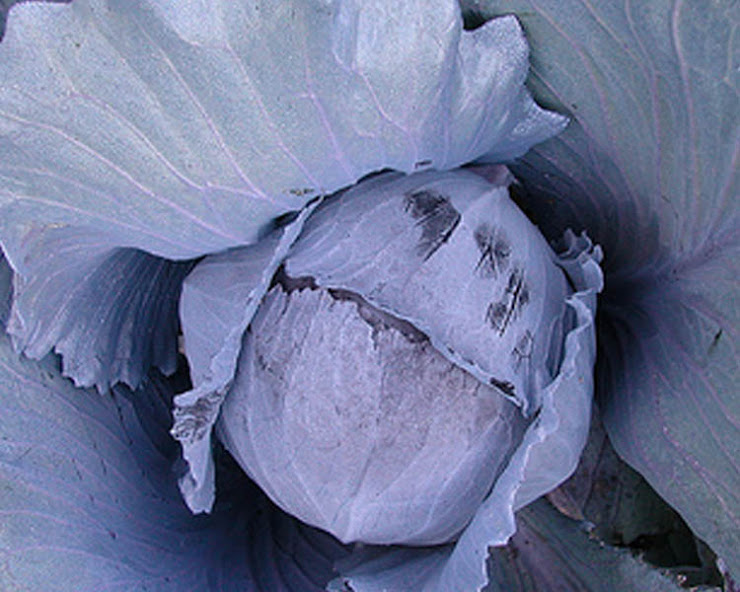
The Big Beet Experiement is nearly complete. Mr. Beet lasted all winter in the refrigerator and has been planted out in the garden. He was stored wrapped in two sheets of newspaper and stored in a plastic produce bag in the crisper. He emerged solid without evidence of rotting and even little baby sprouts shooting from the top. So, out to the garden he goes, planted so that the top is out of the soil, being careful to keep the roots straight, add a good bit of watering and wait to see what happens. The point of overwintering this beet and replanting him is to save seed.
This beet became a candidate for seed saving as a result of it's vigor in the garden, (it grew well and fast), and it's resistance to insect damage (when all the leaves on my other beets were ravaged, this one stood tall and undamaged!). Beets and other roots are biennial plants, in that they produce seeds the second year. So, Mr. Big Beet hopefully will flower and make seeds which I will collect to use in the future. The variety of this beet is called Detroit Dark Red, this beet variety is one on offer by Seed Savers Exchange in Decorah, IA. Seed Savers Exchange promotes heirloom, open pollinated varieties in an effort to maintain the genetic heritage and diversity of our food crops. They also work with heritage breeds of chickens, ducks, turkeys, cattle and apple breeds. The work they do helps to combat the monopolization of our food system by companies who seek to patent genetic material and control the food chain from "birth" to plate. Seed Savers Exchange is a non-profit and do tremendous work on behalf of anyone who eats! (http://www.seedsavers.org/)
Monday, April 19, 2010


Monday, April 12, 2010
Spring is Exploding!
It's time again, this year I think it's sneaking up faster than last year, at least here in Minnesota. I have tons of seedlings started, some more ready than others, all following their own path. The "green house" in the basement is serving well for the heirloom starts, everything from herbs to broccoli. No signs of damping off, and the germination mats are doing the trick.
 After some welcome publicity, the client list expanded by 246% this season, holy buckets! There will be home gardens all over the land at this rate, which is the goal. Why is that the goal you ask? It's all about the food, it's just plain better if you grew it yourself! Heaping portions of pride and accomplishment, with dashes of dispair at times, the whole plate covered with a lovely gravy of nurturing.
What's the secret to keeping plants happy? The same thing as keeping relationships happy, pay attention! and when you can do something good, do it! How you care for your seedlings and plant starts now, has a direct effect on how they produce for you later. The classic plant start is the tomato, it seems everyone wants to grow tomatoes. Here are some rules of thumb...don't start them too early or they get leggy and weak, give them a bigger "home" if they grow out of the old one (don't assume that it will be okay until you plant it out-it's like wearing shoes that are too small, NO GOOD!). When you pot up the seedling, treat it carefully and give it lots of nice new dirt in which to play. Do let it get used to the sun and wind gradually by hardening off, meaning that the plants get ever slightly more exposure to the bright sun and wind over a period of 1-2 weeks. Don't get fooled by a nice warm spell, it could freeze again...wait until at least your average last frost date to plant it outside.
In the meantime, remember that certian things can be direct seeded now, even if it does freeze again. The list includes lettuce, spinach, radish, broccoli, cabbage, dill, beets and carrots. That certianly isn't a complete list but it will get you through the afternoon garden therapy session anyway!
Good Luck, See you in The Backyard!
www.thebackyardgrocery.com
Wednesday, January 27, 2010
Is it time yet? Maybe yes, maybe no...
For the gardener, January is pure torture and delight! The seed catalogs show up and they have all these wonderful glossy pictures, filled with promises of "heavy yields" or "top producer", they promise resistance to drought or heat or cold or disease or infestation and they comfort the agitated gardener who looks upon the garden covered in a blanket of snow and can do nothing but think of spring. I have made my decisions, which as soon as the weather warms, I will abrubtly change I am sure. I have placed my orders, mixed up the starting medium, sanitized my pots and now I wait. Depending on your climate, it may be time to start seeds and get things started, but up here in Zone 4 we wait, or suffer the consequences. In fact for some plants I will wait 2 more months, for others I will wait just a few more weeks. As always, I am firmly on the heirloom side of vegetable gardening, they are true and proven, beautiful and delicious. Check out Seed Savers Exchange in Decorah, IA (http://www.seedsavers.org/) for a complete run down on what they are doing to save our genetic seed heritage. The have started with heritage variety poultry and have some White Park Cattle, which I find to be about as beautiful as can be.
Here's a list of things that I start in February:
Chives, Marjoram, Oregano, Parsley, Rosemary, Thyme, Sage, Peppers (hot and sweet), Onions, Shallots
Remember to use sterilized starting medium, be careful with the watering (bottom watering is best), and give the little planties some good old fashioned heat and light. Heat mats can be purchased, but heating pads or electric blankets seem to work just as well. No need to purchase the fancy "grow lights" I have had great luck with regular florescent lights (warm and cool to cover as much of the spectrum as possible).
Here's what I am dealing with these days:

Happy dreaming to you all!
Thursday, December 31, 2009
Happy New Year: what will you do differently this year?
Happy New Year! It is a special one this time around, a full moon, a blue moon, and it only comes around every 19 years on this day/night. Reflective time, this New Year's Eve. This is the day I review my garden journal. I can't be disciplined enough to maintain a personal journal, to log my success, failure, torments and triumphs, but I can do it for the garden, meticulously. In many ways it reflects how I feel personally as well. You know, sometimes there is just too dang much of something when you are sick of it (zucchinis in August or a particularly irritating co-worker) or not enough of something you feel you really need (Brussel's sprouts or vacation time for example). Personal triumphs are like harvesting your first head of cauliflower, or managing to fend off the tomato blight long enough to get sort of sick of tomatoes. The garden, for those of us who are affected with "gardenitis" (the gardening sickness, that causes lawns everywhere to recoil in fear of getting turned under), the garden is not only our respite and meditation, it also has the capacity to harbor the bane of our existance (imported cabbage worms, yucky!).
So, what will I do differently this year:
I will not be signing up for the same old thing! Change will come and I will like it!
I will NOT overplant the beds so they become these uncontrollable, tangled, mongrel children wrecking havoc on my harvesting and sense of order!
I will police the pest situation with more vigilance.
I will plant turnips, because I love them.
I will spend more time enjoying the rock chair I built in the garden 2 summers ago and have yet to use for it's intended purpose (drinking an ice cold beer after a great day working in the garden).
Looking over my list, it seems pretty manageable. What is in your personal journal you would like to take out to the garden? What is in your garden journal you would like to bring into yourself? What will you do differently?
Wednesday, November 18, 2009
Is it winter? The holdouts...

The Big Beet, or BB is coming inside for a seed saving experiment. I am going to pluck it from it's mulch-y outdoor home, trim off the not yet dead leaves, and pack it in clean dry sand for the winter. I think an ice cream bucket should be just the right size for BB. The plan is that it will stay "alive" enough through the winter to rise again next spring. I will plant it out in the garden and BB should make some seeds. The beet is a member of the Amaranth family and is a biennial, which means that it flowers the second year. So, apparently, if I can keep ol' BB going, I should be able to collect some seeds once the plant flowers. A new experiment for me.
See you in the backyard!
Wednesday, September 30, 2009
The "King" and I
After loving the wonderfully unseasonable temperatures the last two weeks it came, the cold. Whew! This morning was chilly. I pulled out the tomato and eggplant plants yesterday, and covered the peppers (which are doing really well this year!). Early in the planting season, I chose a few pepper plants to put in pots, as I had more than I could use in the garden. These plants have been in a race to see which would be the strongest and most prolific. I was forced to pick a winner yesterday, and my heirloom bell pepper, King of the North variety, was the clear winner. It has nice fruits and a few blossoms. It is my experiment pepper, I am going to baby it until next year. Peppers are native to Central and South America, so they like it warm, far warmer than Minnesota to be sure. I am going through with the experiment to see how this particular variety fares in the less than full sun and some what chilly temps that we have here, even in the house.

The fall is a great, sad time for me. I am in a rush of canning, fermenting and drying foods, trying to keep in mind all the mental notes about how the garden went and planning for next year. My first timer clients are busy with their homework as well, they are reviewing their own gardens and thinking about changes for next year. This is one great reason for a garden journal, even just a notepad to jot down a random thought, something like "The beets were very happy next to the fence this year", or "I will never again try to plant 8 pepper plants in 3 square feet of garden bed" you get the idea. The garden wrap up and planning sessions are the only lessons left for the year. The sad part is the lack of the garden and the looming cold. So, this is why I have choosen the "King" to hang around for the winter, perhaps he and the "Herbs" can arrange a gathering in the skillet.
Thursday, September 24, 2009
September Heat

This morning I picked another basket of tomatoes. Despite the blight, it seems the little guys just keep coming. It's time for another batch of canning. The September heat has been helpful in the garden this fall to say the least. Peppers, corn, squash, beans, beets, lettuce and cabbages are all doing well. Cabbages, ah yes well, the ever icky cabbage worms are in force this year. Daily picking works, but they just won't quit! Yucky little squirmy things, they smell like cabbage when you squish them. There are 2 types that I have trouble with, imported cabbage worms (pictured above)and cabbage loopers (pictured below). The worms are about an inch long, and kind of fat and eat big holes in the leaves, the loopers are shorter and slimmer and eat smaller holes. They both like the bottom side of the leaves, but the worms also can be spotted on the tops. I just pick 'em off and step on them. I have a smaller than desired cabbage harvest this year, but it looks like the fall crop may hold it's own as long as I keep picking. Today I mention the cabbage interlopers because I found two of the big worms on the kitchen counter after setting the basket of tomatoes there this morning. The little guys are so prevelant in the garden that they found their way into the house, either on the basket or the fruits themselves. So, I wish you continued happiness in the garden, bug picking and all.

Subscribe to:
Posts (Atom)